


Flux Adapt Runner vs Brooks Ghost 17: A 10mm Heel Lift Is a Choice. So Is Zero.
The Ghost is one of the most reliable daily trainers ever made — and it puts your heel 10mm higher than your forefoot, the widest gap on this page. The Adapt Runner is dead flat, with a wide toe box and an AdaptSol™ insole carrying 100+ nodes. If you've been running in Ghosts and your feet feel weak, this is why.

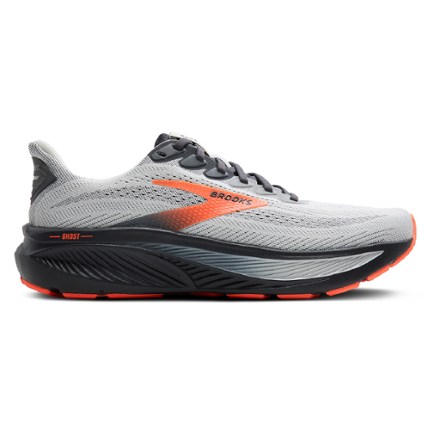
Quick Summary
- You want zero heel elevation and a natural stride
- Your toes feel cramped in conventional running shoes
- You want an insole that actively engages your feet
- You want to build foot and calf strength through your mileage
- You want a plush, predictable, no-thinking-required daily trainer
- You're a committed heel striker
- You're mid-training-block and don't want to change anything
- You want the widest retail availability and support
Head-to-Head Comparison
An honest, side-by-side breakdown of every feature that matters.
| Feature | Flux Adapt RunnerOUR PICK | Brooks Ghost 17 |
|---|---|---|
| Price | $145 | $150 |
| Heel-to-Toe Drop | 0mm | 10mm |
| Toe Box | Wide (anatomical) | Standard tapered |
| Sole Flexibility | High | Low (structured) |
| Ground Feel | High | Minimal |
| Insole | AdaptSol™ 100+ nodes | Standard removable |
| Foot Strengthening | Yes — by design | No |
| Cushioning | Moderate | High (DNA LOFT) |
| Warranty | 1-Year Adapt Guarantee | Standard return window |
| Overall Winner | ★ Best Zero-Drop Road Runner | Best for: see above |
Specifications compiled from manufacturer sites and independent lab testing (RunRepeat, Solereview) as of October 2026. Verify current pricing on each brand's own site.
What Makes Flux Different
Where the Adapt Runner takes a different position to Brooks — and why.
10mm: The Biggest Gap on This Page
Every shoe on this comparison series has a drop. The Ghost 17's is the largest — 10mm of heel elevation.
That's not a defect, it's a design target for heel strikers. But sustained over years it shortens the calf and Achilles complex and biases you toward landing on your heel. Zero drop removes the variable entirely.
Toe Taper vs Toe Splay
Look at the Ghost from above. The forefoot narrows toward the front, because that's how running shoes have been lasted for fifty years.
Your foot is widest at the toes. The Adapt Runner's anatomical last is built to that shape, and the knit upper stretches instead of squeezing — so your toes can spread and grip on push-off.
The AdaptSol™ Insole
DNA LOFT cushions well. It's a genuinely comfortable foam and Brooks has refined it over many generations.
But cushioning is passive. The AdaptSol™ insole's 100+ nodes are active — stimulating nerve endings, engaging arch and forefoot muscles, turning every mile into low-grade foot training.
When the Ghost Is the Right Call
Straight answer: if you're eight weeks out from a race, running well, and injury-free, don't change your shoes. The Ghost is a fine trainer and consistency wins.
Come back to zero drop in the off-season, when you can afford the four-to-eight-week adaptation without compromising a training block.
Independently Reviewed
What testers outside Flux found after putting the Adapt Runner on the road.
“the Flux Adapt Runner oozes comfort not always given to zero drop styles”
Testing the shoe across road and treadmill sessions — easy runs, long runs and tempo work — the reviewer expected to prefer it over shorter distances, but ended up reaching for it on runs beyond eight miles too, and rates it a solid daily trainer for anyone already adapted to zero drop.
Transparent Pricing
No hidden costs. Here's exactly what you get for your money.
Flux Adapt Runner
0mm Drop · Wide Toe Box · Built for Road Miles
- True zero-drop platform
- Wide anatomical toe box
- AdaptSol™ insole — 100+ massage nodes
- Breathable flexible knit upper
- Flexible sole tuned for footstrike
- 30-day returns
- 1-Year Adapt Guarantee
Brooks Ghost 17
10mm Drop · Standard neutral · ~35mm
- 10mm heel-to-toe drop
- Standard neutral fit
- Standard insole
- Brooks construction and materials
- Wide retail availability
- Standard return window
- Manufacturer warranty
Common Questions
Everything Brooks Ghost 17 owners ask before switching to Flux.
Going from 10mm to 0mm — how big a change is that?
Significant. It's the largest transition on this comparison series. Expect four to eight weeks of gradual adaptation: daily wear first, then short easy runs, then distance. Calf soreness early on is normal; sharp Achilles pain is not — back off if you feel it.
Will zero drop fix my knee pain?
It might change the loading pattern, moving stress from the knee toward the calf and Achilles. That helps some runners and creates new problems for others. If you're in pain, see a professional rather than swapping shoes and hoping.
Is the Adapt Runner cushioned at all?
Yes, but far less than the Ghost. The AdaptSol™ insole adds tactile comfort rather than stack height. You'll feel the road — that's the point.
My toes go numb in my Ghosts. Would Flux help?
Possibly. Forefoot numbness is often a width issue, and a genuinely wide anatomical toe box addresses it directly. Note that Flux runs small for most people — size up a half size and use their chart.
Can I use these for long runs?
Reviewers report using the Adapt Runner for 8+ mile road runs. Build up to it rather than starting there, especially coming from a 10mm-drop trainer.
What's the return policy?
Returns and exchanges on unworn footwear within 30 days, plus the 1-Year Adapt Guarantee on manufacturing defects.
Your Feet Have Been on a 10mm Ramp for Years.
Zero drop, a wide toe box, and 100+ AdaptSol™ nodes underfoot. Let your feet find level ground again — and get stronger doing it.
Shop Flux Adapt Runner — $145 →© 2026 · This comparison page is independent and is not affiliated with, sponsored by, or endorsed by Brooks Running. Brooks, Ghost, and DNA LOFT are trademarks of Brooks Sports, Inc. Competitor specifications are cited from manufacturer listings and independent lab testing and were accurate at time of publication; check each brand's site for current specs and pricing.